Romanian is a language you might not have expected to see on this list. But although the country is surrounded by Slavic-speaking countries, Romanian is actually a Romance language and uses much of the same vocabulary as Italian, Spanish and French.
For example,”La revedere,” which is used for saying goodbye, is similar to the Italian “Arrividerci,” and the apology “Scuză-mă” is similar to the French “Excusez-moi.” It’s also a phonetic language, which means most words are spelled the same way they are pronounced.
Of course, there are a few trickier aspects to this language, including grammatical differences and letters with “diacritics.” But, overall, Romanian, which is spoken by around 30 million people, primarily in Romania and Moldova, is a surprisingly easy language to learn.
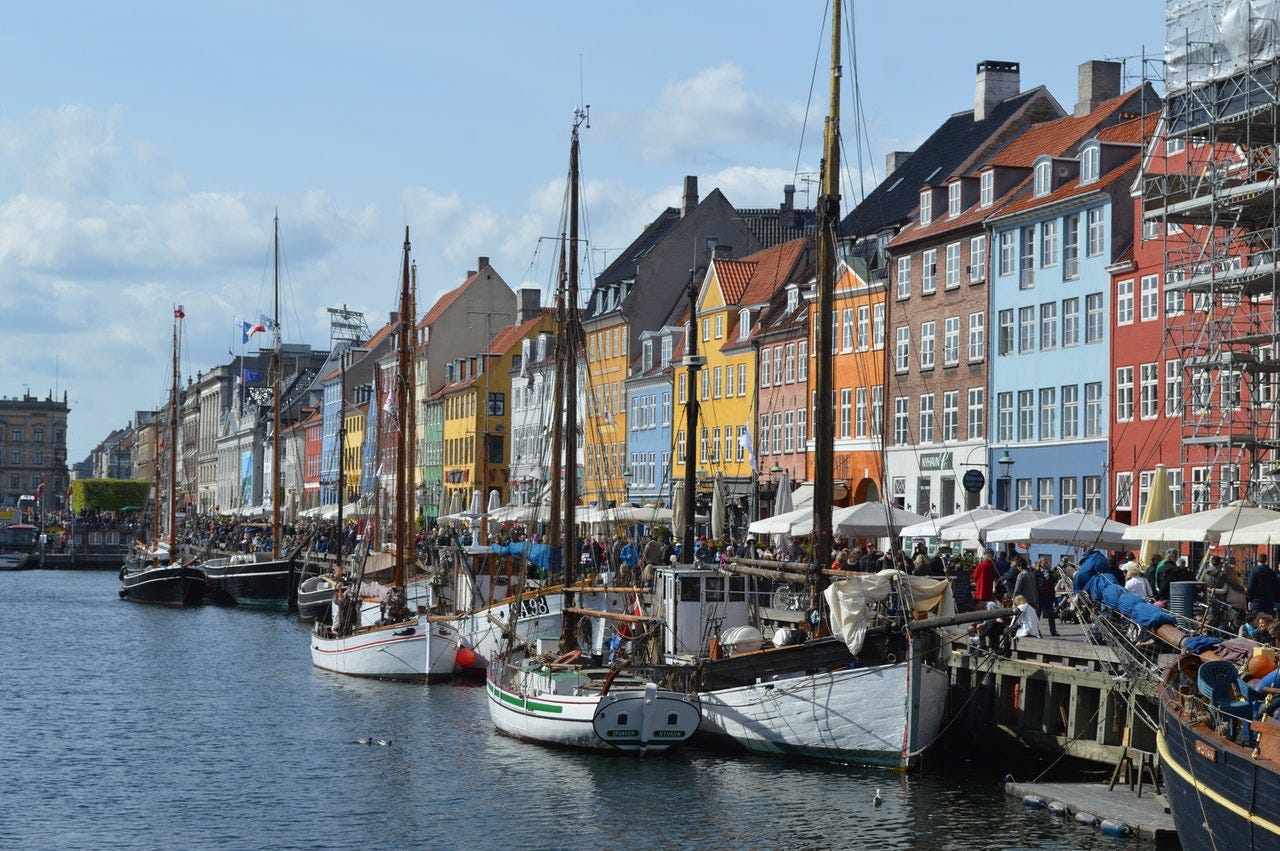
Danish is a Germanic language spoken by around 6 million people, most of whom live in Denmark. Like Norwegian and Swedish, it has fairly straightforward grammar rules and a lot of vocabulary that will be familiar to English speakers.
For example, “Gode tidende” sounds a lot like “Good tidings,” and the word “dyre,” which means “expensive,” is similar to the word “dear,” which is used in English when something is considered too pricey. Because of its more challenging pronunciation, however, Danish isn’t the easiest Scandinavian language to learn.
Even so, if you plan to stay in Denmark for a longer period of time, learning the local language is simply the best way to fully immerse yourself in the country’s unique culture and form deeper connections.
German is, as the name suggests, a Germanic language. It shares many similarities with English, including a common alphabet, comparable sentence structure and familiar vocabulary. For example, everyday German words like “Wasser,” (water) “Apfel,” (apple) and “Fisch” (fish) are very similar to their English equivalents. Download our free German essentials eBook to see the similarities.
One aspect of German that English-speakers do tend to struggle with is the pronunciation, especially when it comes to longer compound words like “Fremdschämen” (cringe) or ““Verschlimmbessern” (to worsen or exacerbate).
But while German might not be quite as easy for English-speakers to grasp as Dutch or Norwegian, it is an extremely useful language to learn, as it’s spoken by more than 100 million people throughout Central Europe, including in Austria, Switzerland and Luxembourg.

Indonesian is one of the most widely spoken languages in the world, with over 40 million native speakers and more than 150 million non-native speakers. As an Austronesian language, Indonesian does differ quite a bit from the Germanic and Romance languages on this list, but it’s actually surprisingly straightforward for English-speakers to learn.
This is partly down to the fact that Indonesian is a phonetic language, which means words are spelled as they sound. Indonesian sentence structure is also similar to English and its grammatical rules are fairly simple.
For instance, to change a singular word to plural, all you have to do is repeat the word or add an extra one. So “child” is “anak” and “children” is “anak-anak.” Easy right?
Malay is spoken by more than 200 million people throughout Southeast Asia. Like Indonesian, it’s an Austronesian language. In fact, it shares many similarities with Indonesian due to the fact that a similar variety of the language is used in Indonesia, Brunei and Singapore.
But, although Malay and Indonesian speakers can generally understand each other, there are some differences in terms of spelling, pronunciation, and vocabulary, with Malay based more on loanwords from English, and Indonesian having more loanwords from Dutch.
Malay is widely considered to be one of the easiest Asian languages to learn, because its grammatical rules are simple and it’s easy to pronounce. Of course, as with any language, there will be lots of new vocabulary to learn, but if you need to spend any amount of time in Southeast Asia, it’s an excellent second language to have under your belt.
14. Swahili

Swahili is a Bantu language and another very useful second language to have, as it’s widely used in East Africa, including in Kenya, Uganda, Rwanda and Tanzania. Although estimates vary greatly, Swahili is thought to be spoken as a native language by around 16 million people, and as a second language by up to 80 million people.
In fact, if you’ve watched the Disney classic “The Lion King” you’ll already be familiar with a number of Swahili words such as “rafiki” (friend) and “simba” (lion). “The pronunciation of most Swahili words is fairly easy, and many are very similar to their English equivalent. For instance, “polisi” is “police” and “baiskeli” is “bicycle.”
There are also some key differences, of course, but if you’re looking to gain fluency in one or more African languages, Swahili is an excellent one to start with.
15. Filipino Tagalog
Filipino Tagalog is one of the official languages of the Philippines and another Austronesian language. On one hand, it’s not an overly complicated language to learn, as the pronunciation isn’t difficult, and much of its vocabulary is borrowed from other languages, including English, Spanish and Malay.
On the other hand, the sentence structure and verb focus of Tagalog is quite different to that of English, which makes it the most challenging language on this list. But, as with many foreign languages, it’s often simply a matter of getting some practice in.
With Tagalog spoken as a native language by around 45 million people, learning it or at least some of the basics, will make your stay in the Philippines a lot easier.
So there you have it, the 17 easiest languages for English speakers to learn. If you’re thinking of investing some time into learning a new language, why not take a look at some of the language courses offered by Berlitz?
16. Afrikaans
Afrikaans is relatively easy for English speakers because it’s packed with familiar words and straightforward grammar. Its vocabulary draws heavily from Dutch — also in this ranking of the easiest languages to learn for English speakers — which shares many common roots with English. This means that many words are instantly recognizable. Besides, Afrikaans is very logical, without complex verb conjugations nor gendered nouns. Its syntax is simple and intuitive, much like English, making sentence construction a breeze. With a phonetic spelling system, what you see is what you get, so pronunciation is easier too. It’s a perfect language for diving in and picking up quickly.
Learning Afrikaans is not just easy, but also incredibly interesting and useful. It opens doors to understanding South African culture, complex history, and its diverse people. Whether you're traveling, doing business, or simply exploring new linguistic horizons, Afrikaans offers a unique glimpse into a vibrant part of the world.
17. Esperanto
Esperanto is a constructed language, born from a wonderful initiative aimed at facilitating international communication. Check out our article on How to create a language here! It’s easy to learn for English speakers, because it was designed with simplicity in mind. Its grammar is straightforward and regular — no exceptions to memorize (right, French language?), and verbs always conjugate the same way. The vocabulary is a blend of words from various European languages, many of which will look and sound familiar to you. With phonetic spelling, pronunciation is intuitive and easy to master.
Learning Esperanto is not just simple; it’s also intriguing and practical. This con language serves as a bridge to a global network of speakers who value cultural exchange and international friendship. Whether you're interested in travel, meeting new people, or exploring new cultures, Esperanto provides a unique and enriching experience. By learning Esperanto, you can engage in vibrant communities, attend international meetups, and even access literature and media in the language. If you’re willing to give it a try, you'll be part of a worldwide conversation in no time!
Worth citing, maybe in honorable mentions like for the hardest languages to learn?: Haitian Creole, Welsh, Russian
Too easy for you and looking for something more challenging? Don't worry, we've got you covered with our top 17 hardest languages to learn for English speakers.
Expand Your Knowledge of Languages
Learn with Berlitz